
How proactive repairs and smarter property management can restore condition, strengthen income, and protect long-term value.

Your building has been trying to get your attention.
First, a drip. Then a stubborn door. Now the storefront looks tired, the heating system needs another service call, and that “small repair” has developed a surprisingly large personality.
If buildings could talk, yours might say: “We need to discuss a few things.”
Behind the humor is a serious ownership issue: physical condition and financial performance are connected. When maintenance slips, operating costs, tenant satisfaction, leasing, and property value can feel the effects.
Repairs Don’t Wait for a Better Economy
When cash flow is tight, delaying repairs can seem like the practical choice. Owners have to balance loan payments, taxes, insurance, utilities, and maintenance against the income coming in.
Unfortunately, the building has its own schedule.
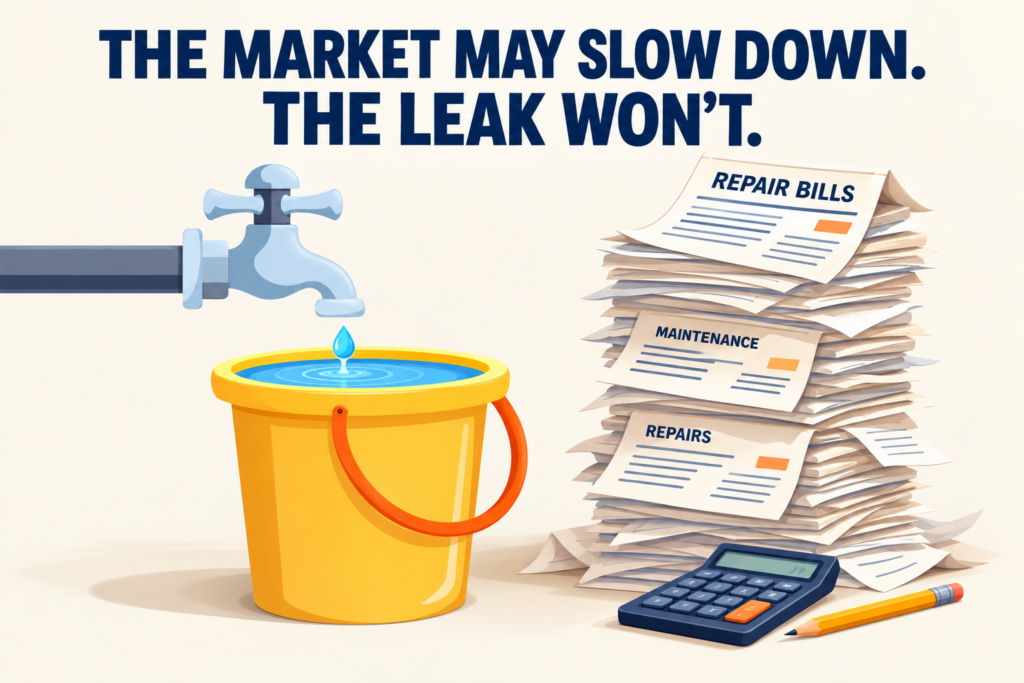
Water intrusion can spread beyond the original leak. Aging equipment can require repeated service calls. A deteriorating entrance can discourage prospective tenants before they ever see the space inside.
The concern is that deferred maintenance can grow faster than the property’s ability to pay for it. Eventually, an owner may face several expensive needs at once, with fewer financial options available.
The goal is to get ahead of that cycle through inspection, planning, and timely action.
Start With a Plan the Property Can Support
Every building has a repair list. Effective management puts that list in order.
Which conditions need immediate attention? Which repairs will prevent further damage? What affects tenant comfort or the ability to lease vacant space? What can be scheduled and funded over time?
A practical plan considers urgency, cost, expected benefit, and available cash. It also distinguishes a lasting repair from a temporary fix that keeps generating another invoice.
Sometimes, the best first move is stopping a leak. Sometimes, it is resolving a recurring heating problem, improving lighting, or making an entrance clean and welcoming.
A comeback starts with understanding what the building needs—and what ownership can reasonably support.
A Fresh Coat of Paint Can’t Fix a Weak Rent Roll
Appearance matters. So do the numbers behind the front door.
A property can look attractive and still struggle with vacancies, outdated lease terms, inconsistent collections, or poorly controlled expenses. A fully occupied building can also be losing ground if maintenance costs keep climbing without a plan.
That is why the physical and financial reviews belong together.
Maintenance decisions should account for tenant needs and operating costs. Leasing decisions should consider the condition of the space and the improvements needed to attract and retain suitable tenants. Major expenditures should fit the owner’s longer-term plans for the property.
The objective is a building that operates reliably and performs more effectively as an investment.
Give Tenants Reasons to Stay

Reliable building systems, responsive communication, and well-maintained spaces shape the tenant experience.
For a storefront business, recurring leaks or unreliable heat can interfere with daily operations. For an apartment resident, unresolved maintenance can become a reason to move.
Keeping tenants informed, addressing problems promptly, and planning disruptive work carefully are practical parts of protecting rental income.
Good management pays attention before a complaint becomes a departure.
Victory Lane Looks at the Building and the Business
At Victory Lane, we bring commercial real estate, property management, and construction experience to the same conversation.
Our approach begins with the owner’s goals, the property’s condition, and its operating performance. From there, we can help identify priorities, coordinate appropriate repairs and improvements, review leasing opportunities, and develop a practical path forward.
For one owner, the priority may be stabilizing cash flow and addressing deferred maintenance. For another, it may be preparing vacant space for leasing or positioning the property for a future sale.
The right plan should reflect the building, the budget, and the owner’s objectives.
What Is Holding Your Property Back?
Some problems announce themselves with a puddle. Others quietly appear in operating statements, lease terms, or months of vacancy.
For a closer look at those less obvious issues, read our 7 Commercial Property Value Leaks That Quietly Cost Owners Income and Equity.
Recognizing where value is slipping away is the first step toward deciding what to do about it.
Your Building Deserves a Comeback
You do not need every answer before starting the conversation.
If your property is facing recurring repairs, rising expenses, vacancies, or a growing list of postponed improvements, let’s review the situation and identify sensible next steps.
Visit our contact page and request a Confidential Property Review. Tell us about your property, your concerns, and what you want ownership to accomplish.

Your building has a to-do list. Let’s give it a plan.
Victor J. Hernandez, CIPE, CPD, CNE
Victory Lane Brokerage | Property Management
206-245-0159
Recent Comments